Why this page exists
Local government often hides tradeoffs behind slogans and process.
Most local political conversations skip the hard part. A decision gets made, or stalled, or handed to a consultant — and the reasoning never quite surfaces in public. What were the competing priorities? Who would benefit? Who would bear the cost? What got traded away?
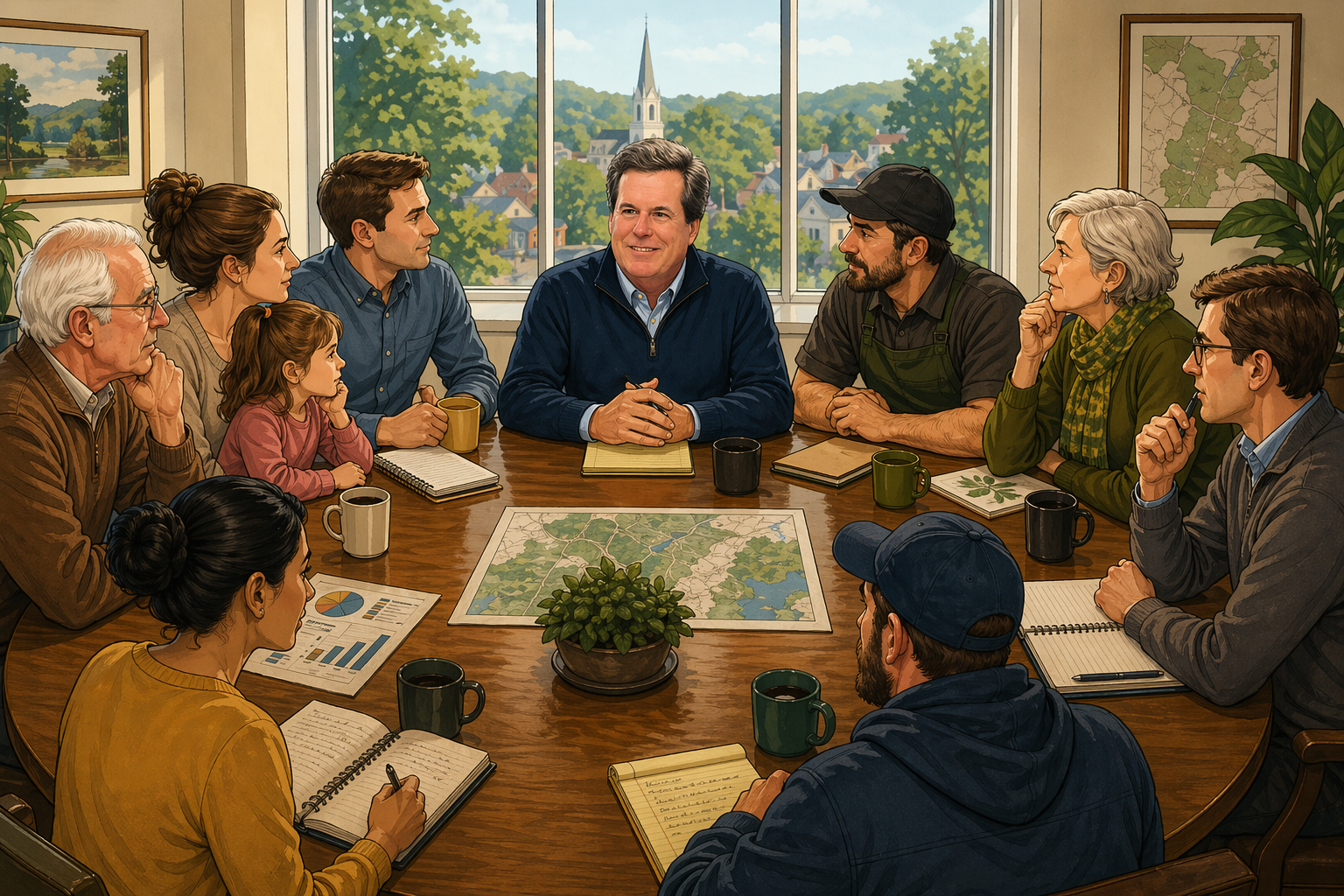
Don wants to show his thinking before he takes a position, not after. That means naming the tradeoffs, not just announcing the conclusion. The Bedford Roundtable is a structured way to surface competing priorities so residents can see the full picture, not just a slogan.
Bedford doesn't need more noise. It needs better judgment, made visible.
Who is at the table
The Roundtable voices.
Eight recurring perspectives — seven AI-assisted civic personas and Don as chair. Each represents a real pattern of concern in Bedford. None is a real resident.
-

Don Scott
Chair · Reviews perspectives, makes the call
-

The Preservationist
Protects Bedford's character
-

The Practical Family
Tests whether daily life actually works
-

The Main-Streeter
Hamlets, storefronts, and visible results
-

The Affordability Realist
Keeps cost burden in view
-

The Environmental Steward
Protects long-term natural stewardship
-
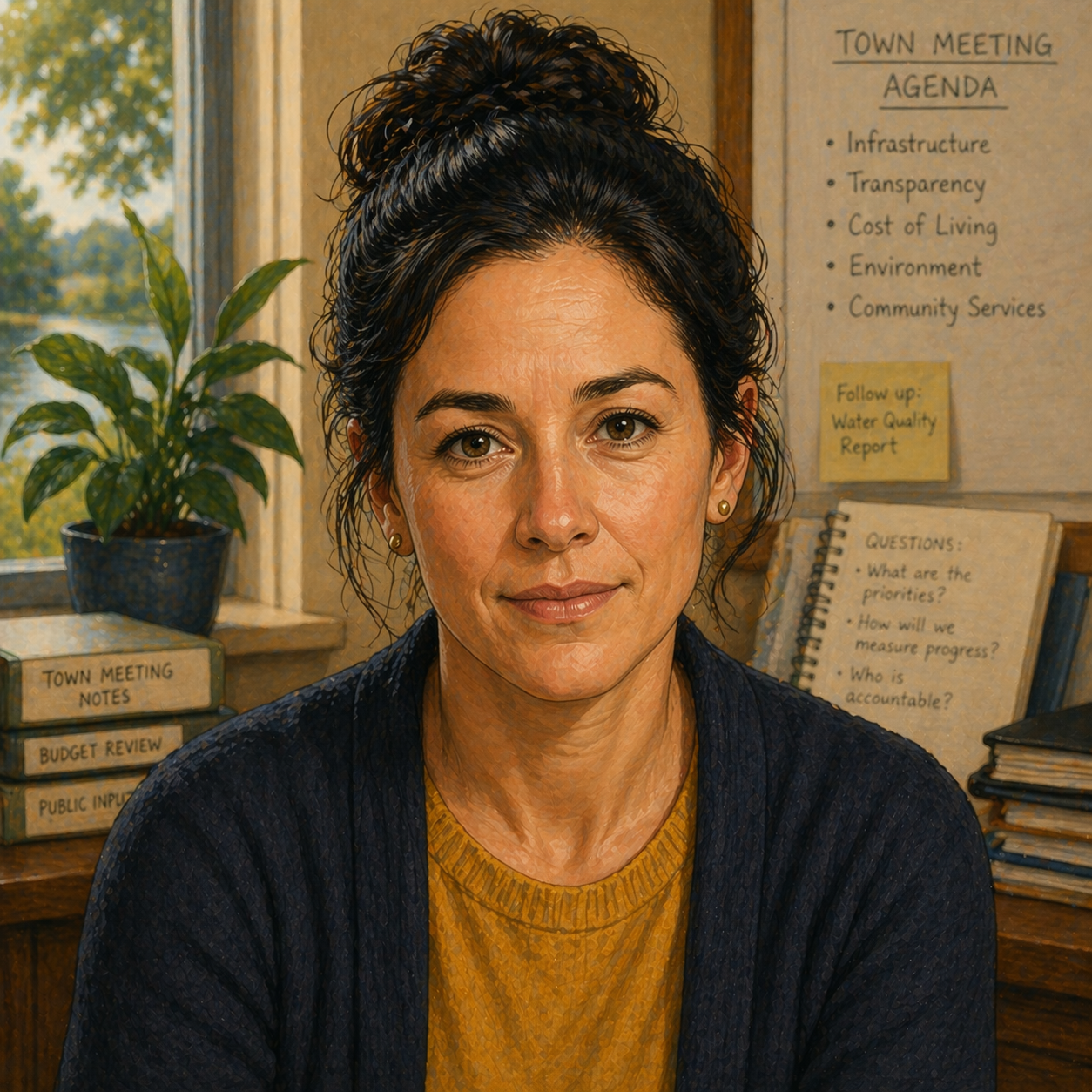
The Civic Skeptic
Asks who decided this and what it costs
-

The Services Neighbor
Keeps the basics front and center
Explore the issues
Bedford's key questions.
Each issue area will be examined through the Roundtable. Individual pages are being built now.
- Roads, Potholes & Infrastructure The basics matter. Roads, drainage, and the town services people rely on every day. Coming soon
- Development, Density & Bedford's Character How Bedford grows without losing what makes Bedford Bedford. Coming soon
- Bedford Hills Revitalization Moving from plans, consultants, and placeholders to visible results. Coming soon
- Leaf Blower Ban & Quality-of-Life Rules Where environmental goals, practicality, enforcement, and everyday life collide. Coming soon
- Consultants, Contracts & Accountability When outside help is useful, when it is wasteful, and how results should be measured. Coming soon
- Energy Costs, Climate Policy & Affordability How to balance sustainability with utility bills, mandates, and cost of living. Coming soon
- Cell Service & Connectivity Basic connectivity is no longer optional for residents, families, and businesses. Coming soon
- Permits, Zoning & Process Delays Why simple things take too long, and how local process can work better. Coming soon
- Sign Rules, Speech & Civic Participation How a town handles disagreement says a lot about how it handles democracy. Coming soon
- Public Safety, Emergency Access & Parking The practical impacts local decisions can have on response times, access, and everyday safety. Coming soon
- Environmental Stewardship vs. Symbolic Policy The difference between measurable stewardship and policy that only looks good on paper. Coming soon
- Town Spending Priorities What Bedford chooses to fund, delay, measure, and explain. Coming soon
What the Roundtable offers
Better decisions come from better conversations.
The Roundtable isn't a gimmick. It's a structured way to pressure-test an issue before Don takes a public position.
-
Clearer tradeoffs
Most local decisions involve real competing interests. The Roundtable names them instead of pretending they don't exist.
-
More transparent reasoning
Residents can see not just what Don thinks, but why — and which perspectives he weighed before deciding.
-
Broader representation
Each persona represents a recurring pattern of concern in Bedford — from affordability to preservation to basic services — so no perspective gets systematically ignored.
-
Less political theater
The process is designed to reduce the gap between what sounds good and what actually works. Slogans get tested before they become positions.
-
A repeatable model
The Roundtable can be applied to any issue. The approach doesn't depend on which specific question is in front of it.
-
Public trust through process
When residents can see the reasoning — not just the conclusion — trust is easier to build and easier to sustain over time.
How we built it
AI-assisted. Human-decided.
The Roundtable uses consistent AI-assisted civic personas to pressure-test each issue. Here's how the process works in practice.
Define the issue
Start with a real Bedford question — not a slogan, not a campaign talking point. Something residents argue about, or a decision that's been avoided for too long.
Pressure-test it through the Roundtable
Each persona responds from its own consistent perspective. What does the Preservationist see? What does the Affordability Realist worry about? What does the Civic Skeptic need to verify?
Identify tradeoffs and common ground
Don reviews the responses, looks for where perspectives align, and names the real tensions — the places where doing right by one group genuinely complicates things for another.
Don states his view
With the full picture visible, Don writes his own position in plain English, with the tradeoffs acknowledged. The AI structures the conversation. It doesn't write the conclusion.
On AI transparency: The personas are synthetic tools — consistent characters designed to represent recurring Bedford viewpoints, not real residents. They help structure perspective-taking at low cost. Don reviews every output before anything is published. No AI-generated content goes live without a human reading it first.
Don's approach
Bedford doesn't need more noise. It needs better judgment, made visible.
The Roundtable is one way Don is trying to show his work — not just tell you what he thinks, but let you see how he got there. If you have a question, a concern, or a perspective that isn't represented here, he'd like to hear it.